The majority of people don’t think about wastewater infrastructure, yet every home, business school, public facility depends on it. When sewer systems function properly they remain out of view. They could result in immediate, costly and disruptive consequences when they fail. A well-designed wastewater lift station is an essential component of the modern infrastructure.
In many locations, gravity alone cannot move water to the treatment plant. Changes in elevation, long pipe runs, flat terrain, and expanding development often require pumping systems to keep sewer moving smoothly. Lift stations bridge this gap, assisting communities and private developments move wastewater efficiently and in a safe manner.
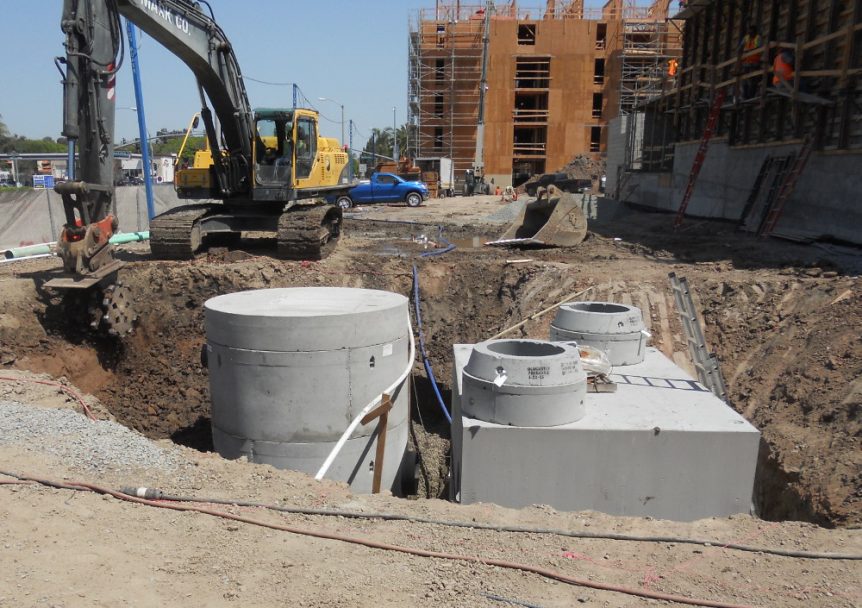
Every wastewater project has unique requirements
Not all sewer lift stations are built with the same goal. A municipal station servicing the growing population has different needs than an individual commercial venture or an industrial site with more demanding wastewater conditions. The rates of flow, the layout access for maintenance, as well as local design standards all impact the way in which the station will be designed.
It is because of this that custom design is so essential. Romtec Utilities builds each lift station to meet the requirements of a particular project instead of trying to to force all locations into one standard set of. Some pumps require low-flow for residential use or industrial or municipal solutions equipped with sophisticated control systems, coatings, and redundancy right from the beginning.
Good design means much more than pumps
A wastewater lift station isn’t just a wet-well and an pump. It’s a full system that is comprised of mechanical, structural and electrical components that have to cooperate. The layout of the valve and pump selection as well as control systems, coatings, flow monitoring technology, access for operators and odor control can all impact the efficiency of the station over time.
The best wastewater designers make a real difference. Systems that are poorly designed may function technically, but they could cause years of headaches with maintenance, corrosion, inefficiency or service interruptions. A station that’s properly planned will not only function from the very first day, but will also remain reliable for many years.
Romtec Utilities creates complete wastewater systems that are customized to the homeowner’s budget, the site’s conditions and long-term goals.
Planning better leads to higher long-term performance
Some wastewater projects require more than a basic plan. Based on the type of project, the lift station could include polymer concrete wells, safety liner systems, odor control equipment, grinder pumps bar screen vaults bypass ports for pumping, or advanced communication systems. These features aren’t simply enhancements to increase complexity. They are often what make the station more efficient and last longer.
It’s for this reason that coordination at the beginning of a project is vital. Romtec Utilities provides integrated design support for all the major lift station elements, which simplifies procurement and provides teams working on projects a clear path from design to construction.
Reliable lift stations safeguard communities and budgets
A dependable wastewater lifting station safeguards the public’s health as well as promotes growth and ensures that sewer systems run without interruption. This can also benefit homeowners, municipalities, and developers by reducing costs for emergencies and downtime.
The best sewer lift stations are often those that aren’t noticed because they do what they’re supposed to do. The key to reaching this level of performance is to use a well-thought-out engineering process and design that is specific to the site, as well working with a partner that has an understanding of the fact that wastewater infrastructure isn’t an all-purpose solution. Romtec Utilities brings that level of experience to each wastewater lift station design as it assists clients to design systems that are built for long-term reliability rather than for short-term ease of use.